
How to Wash and Care for a Wrapped Vehicle
A wrap turns a work truck into a marketing asset worth several thousand dollars, and then most companies hand the keys to whoever is driving that week. The wrap gets treated like paint, run through whatever wash is convenient, and retired years early. The gap between a wrap that dies at year three and one that still shines at year six is mostly maintenance, and the maintenance is easy.
None of it requires special products or much time. It requires knowing a few rules and making them fleet policy, so here is the whole playbook for keeping wrapped vehicles sharp through Winchester summers, pollen season, and salted winters.
How do you wash a wrapped vehicle?
Hand wash it with a mild automotive detergent, a soft sponge or microfiber mitt, and a low pressure rinse, then dry with clean microfiber. Skip brush style automatic washes entirely, because spinning brushes scratch vinyl and catch edges. Pressure washing is acceptable within limits: keep it under 2,000 psi with a wide fan tip, water below 180 degrees, hold the wand at least a foot off the surface, and spray square to the panel rather than at edges or seams.
For a working truck, once a week is the right rhythm. Dirt is abrasive, and the longer it rides, the harder it is on the film.
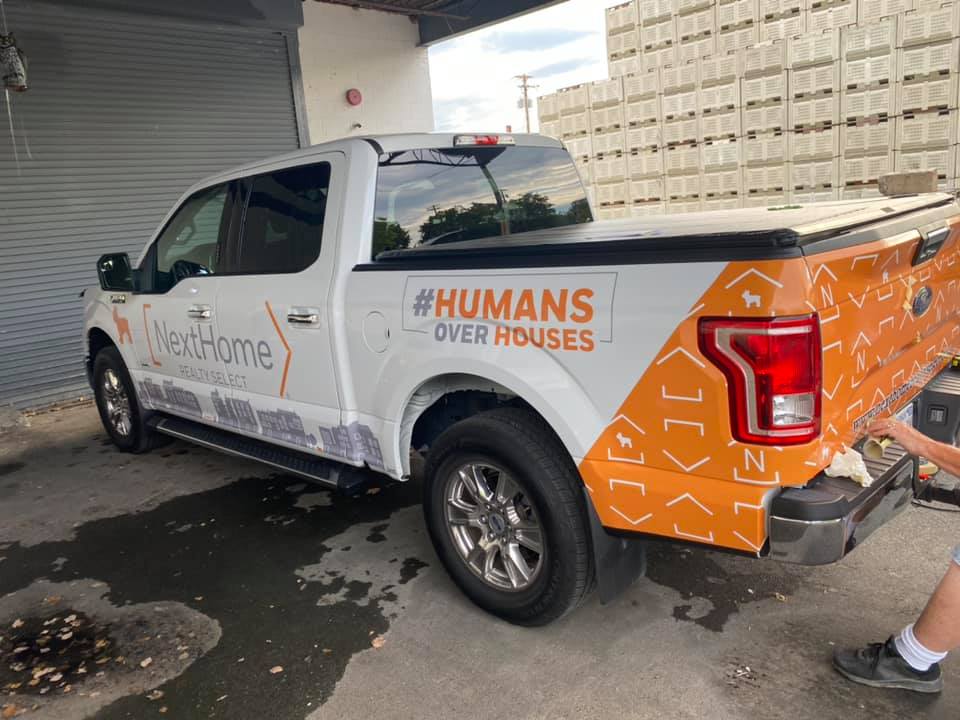
Make washing a fleet routine, not a favor
The fleets that look good all year treat washing like a scheduled task instead of a nice idea. Pick a day, usually Friday afternoon or Saturday morning, and run every wrapped vehicle through the same routine: rinse loose grit top down, wash with two buckets so the mitt stays clean, rinse again, and dry. Ten to fifteen minutes per vehicle protects an asset you paid thousands for.
Fold a quick inspection into the wash. Whoever washes checks edges, seams, and the roofline for lifting, bubbles, or damage, and reports anything they find. Small lifts caught early are a quick reseal at the shop, while lifts that ride for a month become tears, and tears become a panel reprint.
What ruins wraps fastest
Brush car washes top the list, and one trip through an old tunnel wash can do visible damage. Touchless automatic washes are generally fine, but skip extras like spray wax unless you know they are vinyl safe. High pressure aimed at an edge will find any weakness in the install, which is why the wand distance rule matters more on wrapped vehicles than painted ones.
Chemistry is the quieter killer. Solvents like acetone, engine degreaser, and oven cleaner soften vinyl and smear ink, and abrasive polishes or rubbing compounds burn straight through the laminate. If a product does not say it is safe for vinyl wraps, keep it off the truck, and never let crews run a dry rag over a dusty panel, which grinds grit in like sandpaper.
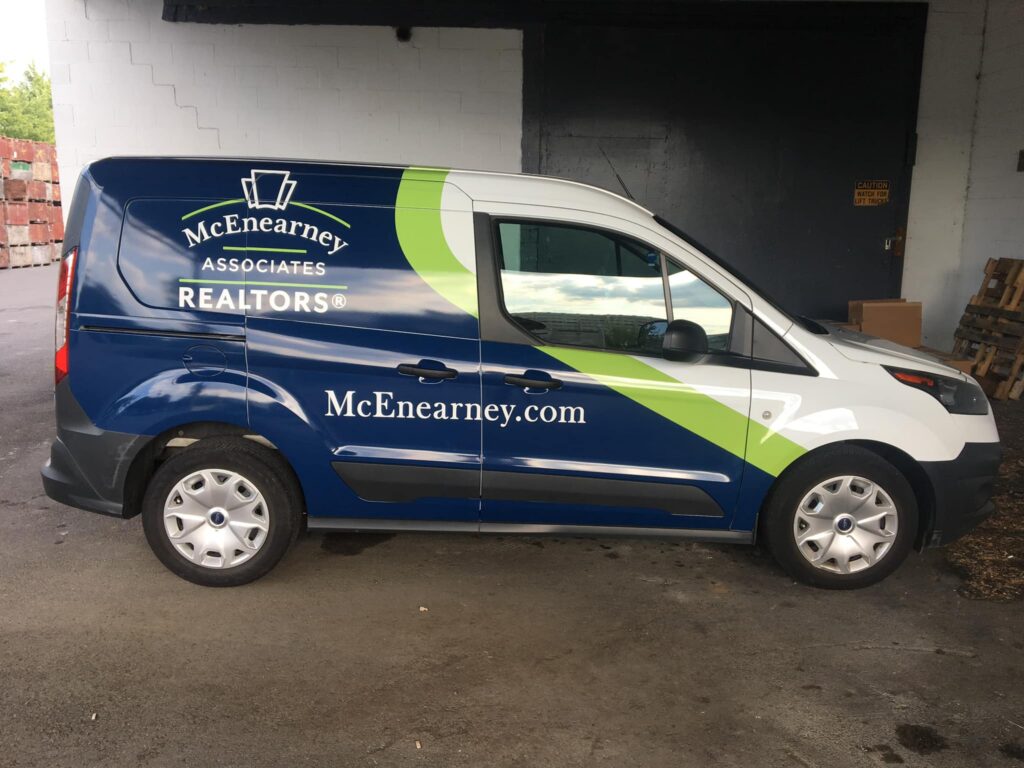
Treat spills and stains while they are fresh
Fuel is the emergency. Diesel or gasoline that runs down a wrapped panel wicks under the film and attacks the adhesive, so wipe spills immediately and rinse the area at the next stop. Bird droppings, bug splatter, and tree sap all etch vinyl if they bake in the sun, and the Valley provides plenty of all three from spring through leaf drop.
The technique is soak, not scrub. Lay a warm, soapy microfiber over the spot for several minutes and wipe gently, repeating as needed. For stubborn sap or tar, a mix of two parts isopropyl alcohol to one part water handles most of it, tested first somewhere out of sight. Plastic scrapers, razor blades, and fingernails are how stains turn into scratches.
A seasonal calendar for the Shenandoah Valley
Each season here asks something different from a wrap. Spring drops pollen thick enough to change the truck’s color, so rinse frequency goes up. Summer is the UV season, when shaded or covered parking pays its biggest dividend and weekly washes clear the sap. Fall brings leaf stains, acorns, and the first brine trucks on the roads.
Winter deserves its own rule: road salt and liquid brine are corrosive and love to collect along rocker panels and lower edges, so rinse the bottom third of wrapped vehicles weekly through the salt months. Never chip ice off a wrap with a scraper, let the defroster and a soft brush do it. Trucks that sleep outside in January will pay you back with an extra year or two of color.
Bottom Line
Wrap care comes down to weekly hand washing, no brush washes, gentle pressure washing at a distance, fast attention to fuel and stains, and a salt rinse habit in winter. Make it fleet policy and your graphics will still look freshly installed when the truck itself is paid off. If a panel is already lifting or stained, bring it by Winchester Signs & Vehicle Wraps and the shop will tell you honestly whether it needs a reseal, a panel reprint, or nothing at all.
Related reading: our signs vehicle wraps services, How Long Do Vehicle Wraps Last in the Virginia Sun


